Agile Learning Product System
Agile Learning Product System
I’m looking at PM certs right now, trying to be honest about what’s worth the time and what’s just noise for the kind of roles I want next.
Here’s a decision I’ve made, and why:
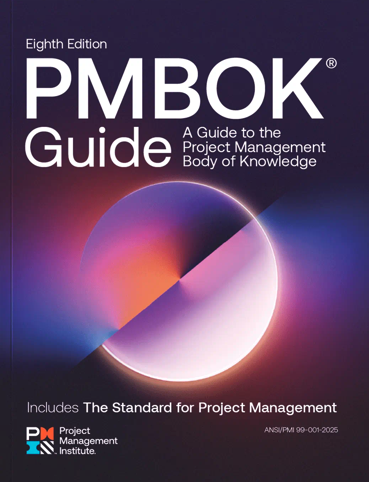
I’m waiting to take the PMP until the PMBOK 8 direction is clearly in the exam.
I’m looking at PM certs right now, trying to be honest about what’s worth the time and what’s just noise for the kind of roles I want next.
Here’s a decision I’ve made, and why:
I’m waiting to take the PMP until the PMBOK 8 direction is clearly in the exam.
The PMP exam is based on PMI’s Exam Content Outline (ECO). The ECO is what the test is actually built from. The PMBOK guides are reference material, but the exam isn’t tied to one specific edition.
When PMI publishes a new PMBOK, the exam doesn’t flip overnight. There’s a transition window, and PMI updates the ECO on its own timeline. They’ve already published a new ECO for July 2026, which points the exam toward PMBOK 8, but also makes it clear that the real cutoff is the ECO update date, not the book release.
So this isn’t about being precious over editions.
It’s about not putting months of effort into one baseline and then walking into another.
PMBOK 7 was where PMI moved hard toward principles and broader “how to think” guidance instead of a strict process checklist. It’s the edition that pushed flexibility and value delivery the most.
PMBOK 8 keeps that principles-first base, but adds back more process guidance. Not in a rigid “follow these steps” way, more like “here are the common practices and how to tailor them.” It also bakes in more about hybrid delivery, modern tools, and AI.
That combo is closer to how I already work: lead with principles, then pull in process where it earns its keep.
Three things shape how I run programs:
1. Principles before paperwork.
I care more about whether the work is real and moving than whether it checks every box.
2. Hybrid is normal.
Most programs aren’t pure Scrum or pure Waterfall. They’re built around reality: the team, the product, the constraints.
3. Tailoring is the job.
I don’t want a cert that rewards memorizing a method. I want one that rewards choosing and adapting methods on purpose.
PMBOK 8 seems to be pushing in that direction. That’s why I’m comfortable waiting for the exam to catch up to it.
Waiting on PMP doesn’t mean waiting on growth. Right now I’m putting my time into things that matter no matter what edition PMI is on:
When the PMBOK 8 baseline is clearly settled into the exam, I’ll take PMP then, with a cleaner runway and less wasted prep.
I know Agile methodologies can be frustrating for some folks, but you really can’t beat the short iterations and empirical evidence for proving delivery of value. Is it somewhat risky because you’re not calling out every key program milestone like you do in Waterfall? Yes. Is it possible to have horrible scope creep? Yes. Can you be sure you’re not wasting 18 months after 2? Absolutely. Agile only pays off if you can actually see what’s helping or hurting delivery.
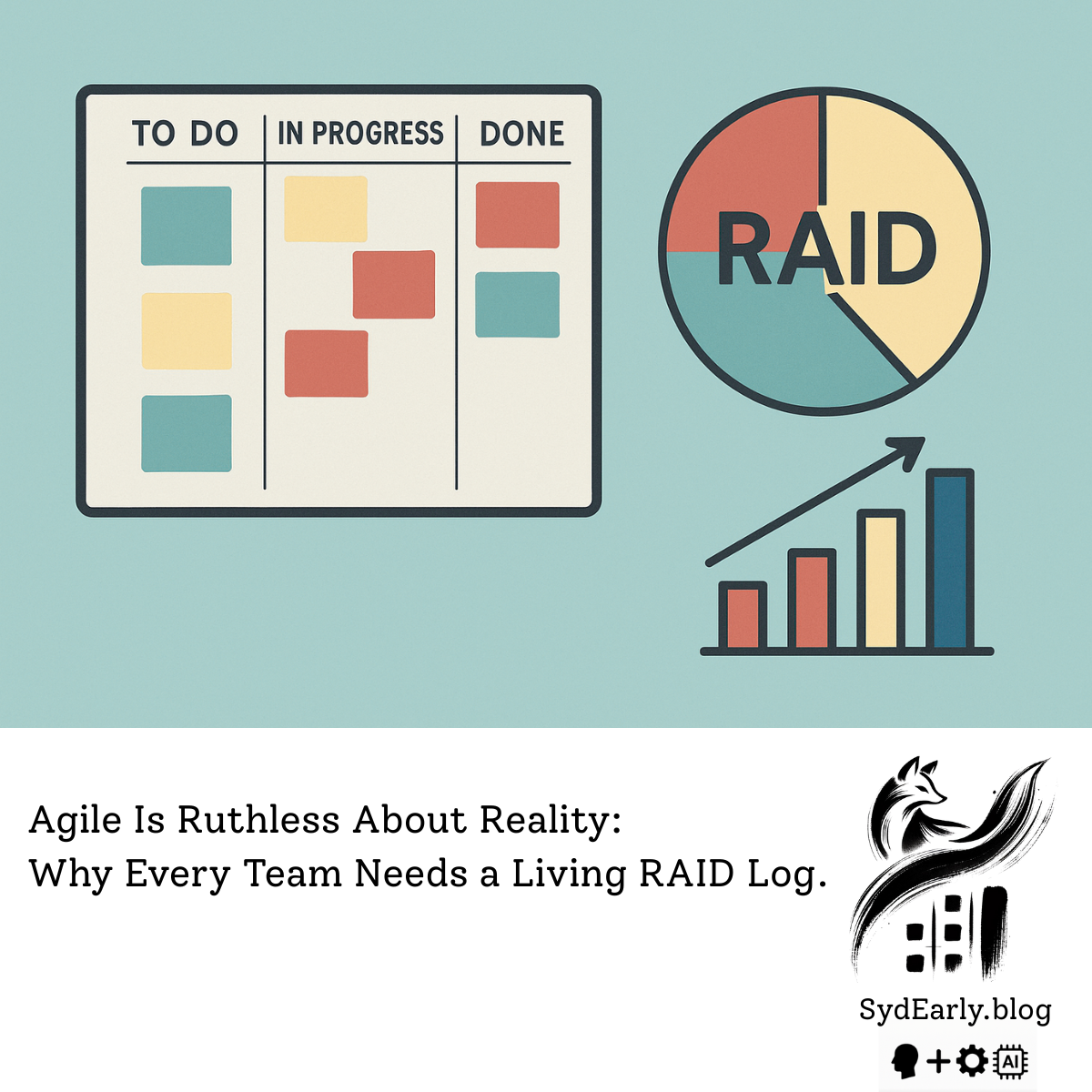
That only works, though, if you’re honest about what’s really happening inside the work. For me, that honesty lives in a simple tool: a living RAID log.
As a PM/PO working with Agile, I think you should keep a constantly updated RAID log in Confluence or whatever system your team actually uses. Not a dusty artifact you fill out for a steering deck and never look at again, but a working object you interrogate every sprint. In Scrum, it’s even better to walk it right before (or during) the Sprint Retrospective, when the team is already in an inspect-and-adapt mindset.
RAID is basic on paper:
Risks / Assumptions / Issues / Dependencies.
But when it’s alive, it becomes the connective tissue between strategy, teams, and reality. It’s where you see the early warning lights, name your bets, expose the uncomfortable truths, and make decisions you can defend later.
Most teams say they’re “managing risk.” A living RAID log is where you prove it.
Create a simple table with columns like:Type | Item | Description | Owner | Due / Review Date | Status
R – Risks (might happen)
A – Assumptions (we’re treating as true)
I – Issues (already happening)
D – Dependencies (outside our direct control)
Before or during Retro, quickly scan the log:
If you’re a PM or PO, try this: in your next sprint, spend 10 minutes with your team building a living RAID log and commit to reviewing it every Retro for a month. See what changes when risk, assumptions, issues, and dependencies are actually visible.
If you’re a hiring manager or delivery leader who cares about this kind of ruthless honesty in Agile, I’d love to connect. I’m always up for swapping stories about what really works in complex delivery and how we can build healthier, more transparent teams.
I recently passed the Professional Scrum Product Owner I (PSPO I) certification from Scrum.org.
Here are the materials I used to prepare:
You can verify my certification here:
I’m sharing these links because they helped me deepen my understanding of the Product Owner role and prepare efficiently for the assessment.
A short, one-time Scrum pilot for small remote teams who want empirical evidence before committing to Agile. Real ceremonies, real data, honest results.
A one-time pilot for small remote teams, open through March 2026.
Many small teams want to explore Scrum but don’t have a project manager,
don’t want to stand up a full process they’re unsure of,
and don’t know if it would actually work for them.
That’s what this pilot is for.
This winter, I’m opening a short, one-time Scrum pilot for small remote teams who want to get empirical evidence before committing to Agile.
I’ll facilitate the real ceremonies, track real data, and help your team interpret the results.
If Scrum improves your delivery rhythm, we’ll know why.
If it doesn’t, we’ll still have learned something valuable: truth about your own system.
Either way, it’s progress grounded in evidence, not buzzwords.
This is a one-time, reduced-rate offer running only through March 2026.
Once I take on my next full-time role, I won’t be offering this kind of hands-on facilitation again.
It’s a limited chance for a small team to get experienced Scrum guidance at a fraction of the usual commitment.
If you’re leading a small business or startup and want to explore Scrum in a focused, low-risk way,
reach out through email at sydearly@icloud.com with the subject Scrum Pilot or connect with me on LinkedIn.
Let’s build an experiment worth running.
I recently passed the Professional Scrum Master I (PSM I) certification from Scrum.org.
Here are the materials I used to prepare:
You can verify my certification here:
I’m sharing these links because they helped me understand the framework clearly and prepare efficiently.